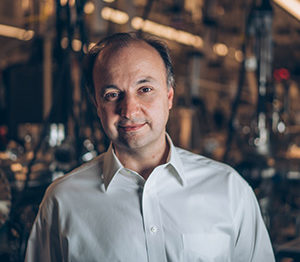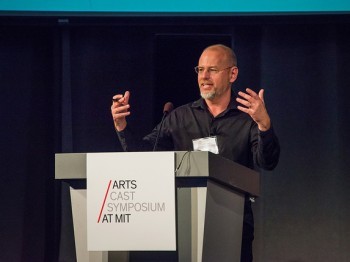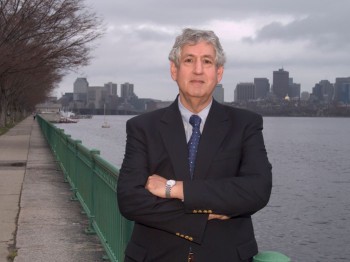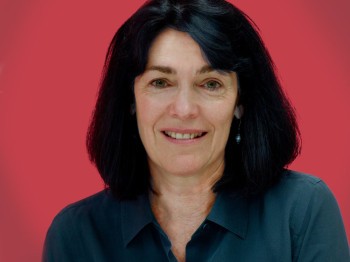
CAST Director Evan Ziporyn works closely with a faculty advisory committee and Executive Director of Arts Initiatives Leila Kinney to implement the Center’s mission and activities.
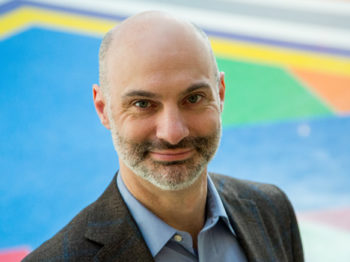
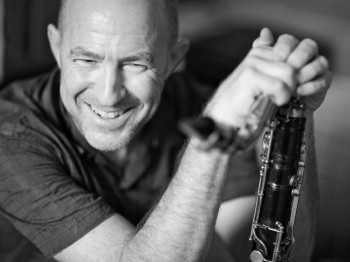
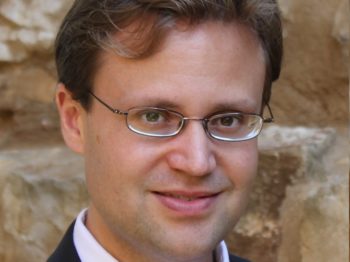
![]() Director | Evan Ziporyn, award-winning composer and clarinetist, is Kenan Sahin Distinguished Professor of Music at MIT. His works have been commissioned and performed at major venues worldwide by by Yo-Yo Ma’s Silk Road, Kronos Quartet, American Composers Orchestra, Maya Beiser, So Percussion, Wu Man, and the Boston Modern Orchestra Project. His opera, House in Bali, directed by MIT colleague Jay Scheib, was featured at BAM's 2010 Next Wave Festival. As a clarinetist, he is a founding member of the Bang on a Can All-stars (Musical America's 2005 Ensemble of the Year), with whom he has toured the globe and performed over 100 commissioned works, including a series of concerts & residencies at MIT featuring Terry Riley, Steve Reich, Michael Gordon, Christian Marclay, and many others. At MIT, Ziporyn directs Gamelan Galak Tika, a groundbreaking ensemble dedicated to new and experimental music for Balinese instruments in combination with western instruments, both acoustic and electronic, human and robotic. He was a 2011 Massachusetts Cultural Council Fellow and the 2007 recipient of a USA Artists Walker Fellowship. |
![]() Muriel R. Cooper Professor of Music and Media at MIT Media Lab | Tod Machover, called “America’s most wired composer” by the Los Angeles Times, is known for his innovative, influential compositions as well as for designing new technologies for music. He is the Muriel R. Cooper Professor of Music & Media at the MIT Media Lab, where he directs the Opera of the Future Group, and in Spring 2011 was Director of FAST, the Festival of Art, Science and Technology in celebration of MIT's 150th anniversary. Machover has received numerous prizes and awards, including the "Chevalier des Arts et des Lettres" from the French government and the Ray Kurzweil Prize for Music and Technology. He is the inventor of Hyperinstruments, which extend musical expression and creativity for virtuosi as well as for the general public. He has composed six operas, including the robotic Death and the Powers, which premiered in Monaco and the U.S. during the 2010/2011 season, and was Finalist for the 2012 Pulitzer Prize in Music. Machover is currently working on A Toronto Symphony, which he is composing in collaboration with the entire city of Toronto for premiere by the Toronto Symphony Orchestra in March 2013. |
![]() Associate Professor of Theater Arts at MIT | Associate Professor of Theater Arts and 2011-12 Guggenheim Fellow Jay Scheib’s productions include World of Wires, for which he won an Obie Award for Directing in 2012. Scheib has collaborated with choreographer Yin Mei on a new dance theater work titled The Seven Sages, with the Hong Kong Dance Company in Hong Kong. Recent works include Evan Ziporyn’s A House in Bali at the Cutler Majestic Theater in Boston and at the Brooklyn Academy of Music’s Next Wave Festival 2010, followed by a new staging of Fidelio at Saarländische Staatstheater in Saarbrücken, Germany, Brecht’s Puntila und sein Knecht Matti at Theater Augsburg in Germany, and Bellona, Destroyer of Cities, which premiered at The Kitchen in New York, later played in Paris as part of the Maison des Arts Creteil (MAC) Exit Festival, followed by a Spring 2011 run at the Institute of Contemporary Art in Boston. Other recent works include, Untitled Mars (This Title May Change), which received an Obie award for Scenic Design, and This Place is a Desert, which was named one of the Ten Best Shows of 2008 by Time Out New York. Concurrent with these productions, Scheib’s collaboration with punk rock ensemble World/Inferno Friendship Society, Addicted to Bad Ideas, toured to numerous venues around the world. In the Spring of 2009, Scheib was listed Best New York Theater Director by Time Out New York, and American Theater Magazine called him one of the twenty-five theater artists who will shape the next twenty five years of American theater. |
![]() Associate Professor of Architecture at MIT | J. Meejin Yoon is Associate Professor and Director of the Undergraduate Program in Architecture at MIT. Her design research investigates the relationship between architecture, public space and technology. As the founder of MY Studio and co-founder of Howeler + Yoon Architecture, she is engaged in a multidisciplinary practice, operating in the space between architecture, art and landscape. Her prominent design projects include: Chengdu Skycourts (a 60,000 s.f. exhibition hall for the Chengdu Biennial), White Noise White Light (an interactive public space installation for the Athens 2004 Olympics), and 3 Degrees of Felt (the Aztec Empire Exhibition at the Guggenheim Museum). Her work been exhibited at the Los Angeles Museum of Contemporary Art, the Museum of Modern Art, the Smithsonian Cooper-Hewitt, the Chicago’s Museum of Contemporary Art, the Somerset House in London, and the Tokyo National Art Center. Her many design awards include Architecture Record Design Vanguard, the United States Artist Award in Architecture and Design and the Rome Prize. |
![]() Caroline Jones Professor of Art History at MIT | Caroline Jones studies modern and contemporary art, with a particular focus on its technological modes of production, distribution, and reception. Trained in visual studies and art history at Harvard, she did graduate work at the Institute of Fine Arts in New York before completing her PhD at Stanford University in 1992. Previous to completing her art history degree, she worked in museum administration and exhibition curation, holding positions at The Museum of Modern Art in New York (1977-83) and the Harvard University Art Museums (1983-85) while she completed two documentary films. In addition to these institutions, her exhibitions and/or films have been shown at the San Francisco Museum of Modern Art, the Hirshhorn Museum and Sculpture Garden in Washington DC, the Hara Museum Tokyo, the Boston University Art Gallery, and MIT's List Visual Art Center, among other venues. She is the recipient of fellowships from the National Endowment for the Humanities and the John Simon Guggenheim Foundation (among others), and has been honored by fellowships at the Radcliffe Institute for Advanced Studies (2013-14), the Newhouse Center for the Humanities at Wellesley College (2009-10), Institute national d'histoire de l'art in Paris (2006-07), the Wissenschaftskolleg zu Berlin and the Max Planck Institüt (2001-02), the Institute for Advanced Studies in Princeton (1994-95), and the Stanford Humanities Center (1986-87). Her books include Eyesight Alone: Clement Greenberg's Modernism and the Bureaucratization of the Senses (2005), Machine in the Studio: Constructing the Postwar American Artist, (1996/98, winner of the Charles Eldredge Prize from the Smithsonian Institution); Bay Area Figurative Art, 1950-1965, (1990, awarded the silver medal from San Francisco's Commonwealth Club); and Modern Art at Harvard (1985). She edited Sensorium: Embodied experience, technology, and contemporary art (2006) and co-edited Picturing Science, Producing Art (1998). She has published on subjects ranging from Francis Picabia to John Cage to new media art to biennial culture, in journals such as Artforum, Critical Inquiry, Res, Science in Context, caareviews online, Texte zur Kunst, and Cahiers du Musée national d'art moderne. Jones's ongoing research interests include globalism and new media art, which will be published in her forthcoming book Desires for the World Picture: the global work of art. |
![]() Stefan Helmreich | Stefan Helmreich received his PhD in Anthropology from Stanford University and prior to coming to MIT held fellowships at Cornell, Rutgers, and NYU. His research examines the works and lives of biologists thinking through the limits of "life" as a category of analysis. Alien Ocean: Anthropological Voyages in Microbial Seas (University of California Press, 2009) is a study of marine biologists working in realms usually out of sight and reach: the microscopic world, the deep sea, and oceans outside national sovereignty. This book, winner of the 2010 Senior Book Prize from the American Ethnological Society, the 2010 Gregory Bateson Book Prize from Society for Cultural Anthropology, and the 2012 Rachel Carson Book Prize from the Society for Social Studies of Science, charts how marine microbes are entangled with debates about the origin of life, climate change, property in the ocean commons, and the possibility of life on other worlds. An earlier book, Silicon Second Nature: Culturing Artificial Life in a Digital World (University of California Press, 1998) is an ethnography of computer modeling in the life sciences. In 2000, it won the Diana Forsythe Book Prize from the American Anthropological Association. Helmreich's newest research concerns the cultural circulation of such abstractions as "water," "sound," and "waves." His essays have appeared in Critical Inquiry, Representations, American Anthropologist, and The Wire. |
![]() Mellon Postdoctoral Fellow, 2013–2015 | David Mather received his PhD in 2011 from the Art History, Theory, and Criticism Program at University of California, San Diego. His dissertation on early Italian futurism was an interdisciplinary project that investigated the visual structure of movement across the mediums of painting, cinema, sculpture, and photography. His work situates these creative practices among diverse social and intellectual currents of that period, such as their key relations to the discourses of automatism. He is currently completing a postdoctoral fellowship at the Getty Research Institute in Los Angeles, where he is investigating color theories and practices in the early 20th century, looking at the interchange between science and the avant-garde and at the relationship between color, time, and perception in particular. His published writings and interviews have appeared in LEONARDO, the Sarai Reader, Left History journal, and SITES Architecture, as well as in edited volumes and exhibition catalogs. He has also curated contemporary exhibits involving electronic media and sound art, along with more traditional mediums, and has worked with several Los Angeles-area nonprofit arts organizations: Southern California Consortium of Art Schools, the Fellows of Contemporary Art, West of Rome, and the Society for the Activation of Social Space through Art and Sound. |
![]() Executive Director of Arts Initiatives at MIT | Executive Director of Arts Initiatives Leila W. Kinney works with Associate Provost Philip Khoury, the School of Architecture and Planning (SA+P), the School of Humanities, Arts, and Social Sciences (SHASS), the Creative Arts Council, the Council for the Arts at MIT, the MIT List Visual Arts Center, and the MIT Museum to advance the arts at MIT in the areas of strategic planning, cross-school collaborations, communications and resource development. She is an art historian with experience in both SA+P, where she was on the faculty in the History, Theory and Criticism section of the Department of Architecture (HTC) and SHASS, where she taught in the Program in Women's Studies and in Comparative Media Studies. She specializes in modern art, with an emphasis on media in transition, arts institutions and artists' engagement with mass culture. She is a member of the Board of Mass Humanities and of the Advisory Committees of the Catalyst Collaborative at MIT, the MIT List Visual Arts Center and the MIT Museum. |