
MIT’s Arts Scholars make their first trip to the BSO’s summer home for a day of parades, conductorless Beethoven, and a cellist on a golf cart
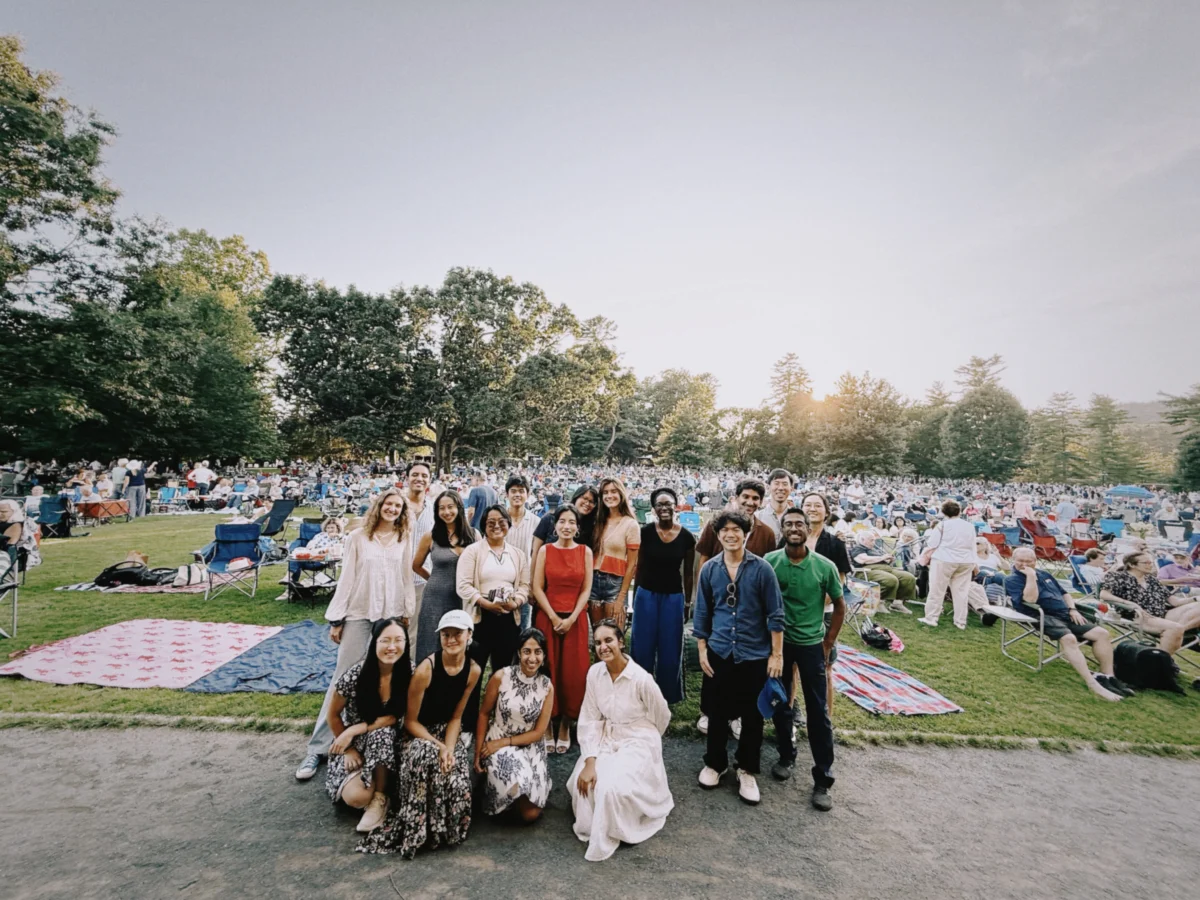
Past midnight on a Saturday in August, a chartered bus on the Mass Pike carried a group of MIT students back to Cambridge. They had left that morning for Tanglewood, the Boston Symphony Orchestra’s summer home in the Berkshires, and were talking about what they’d seen for the better part of an hour. Nobody was asleep.
It was the Arts Scholars’ first trip to Tanglewood, and the program’s first field trip of any kind since the pandemic. In recent surveys, members had described the program as “a reservoir of arts and humanity, refreshing and rejuvenating, in a very technical university,” and when asked what they wanted more of, they kept naming the same things: live music, conversations with musicians, Tanglewood itself. So Rayna Chou, the program’s coordinator, chartered a bus.
Tanglewood on Parade
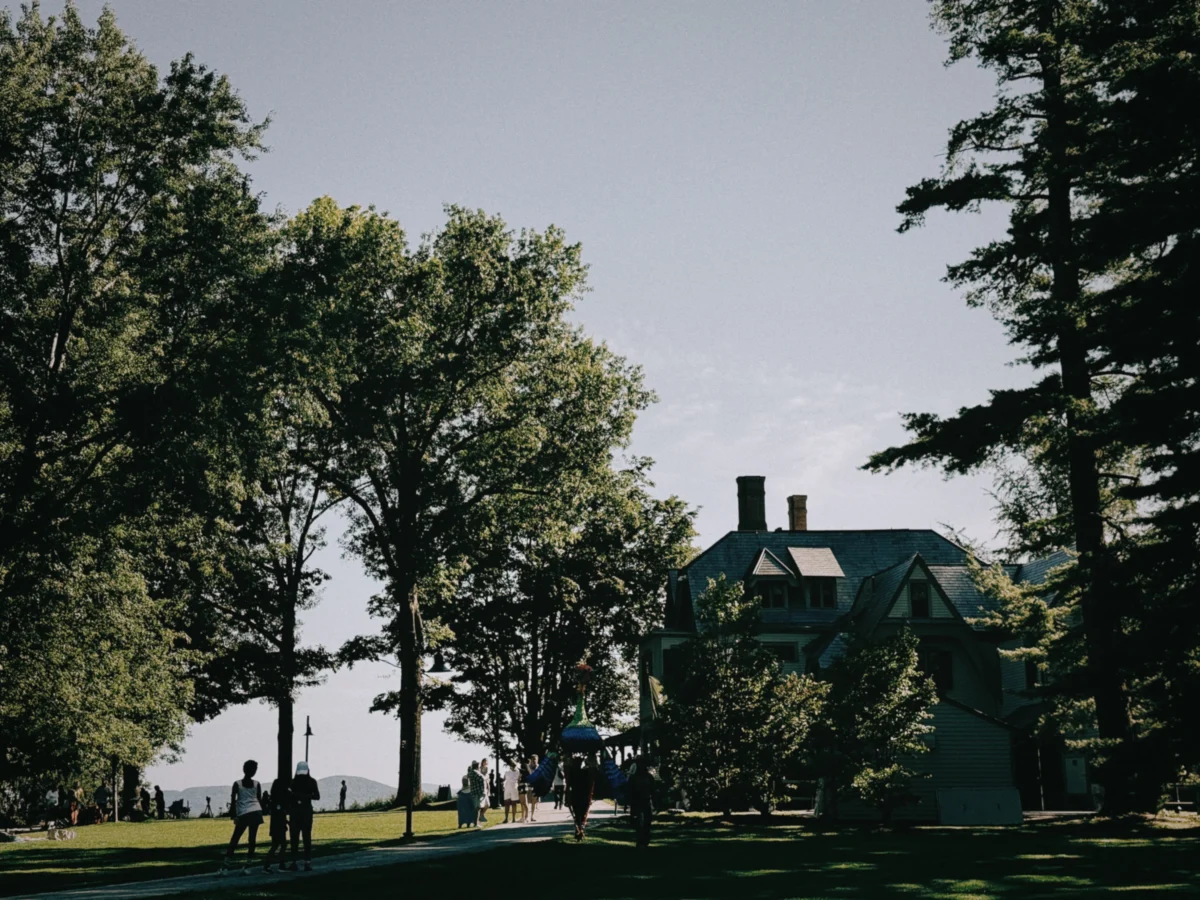
They arrived in the middle of the annual benefit, Tanglewood on Parade: Making Music in Community, curated this year by Yo-Yo Ma. The premise was to collapse the distance between Tanglewood’s many resident communities and the audience that comes to hear them. In practice this meant the grounds were bustling: square dancing with the Ida Mae Specker Band, a grand parade, marching bands, giant puppets, acrobats, storytelling, and Yo-Yo Ma himself touring by golf cart with a megaphone, shepherding people from one event to the next. One Scholar described his energy as pure jollity.
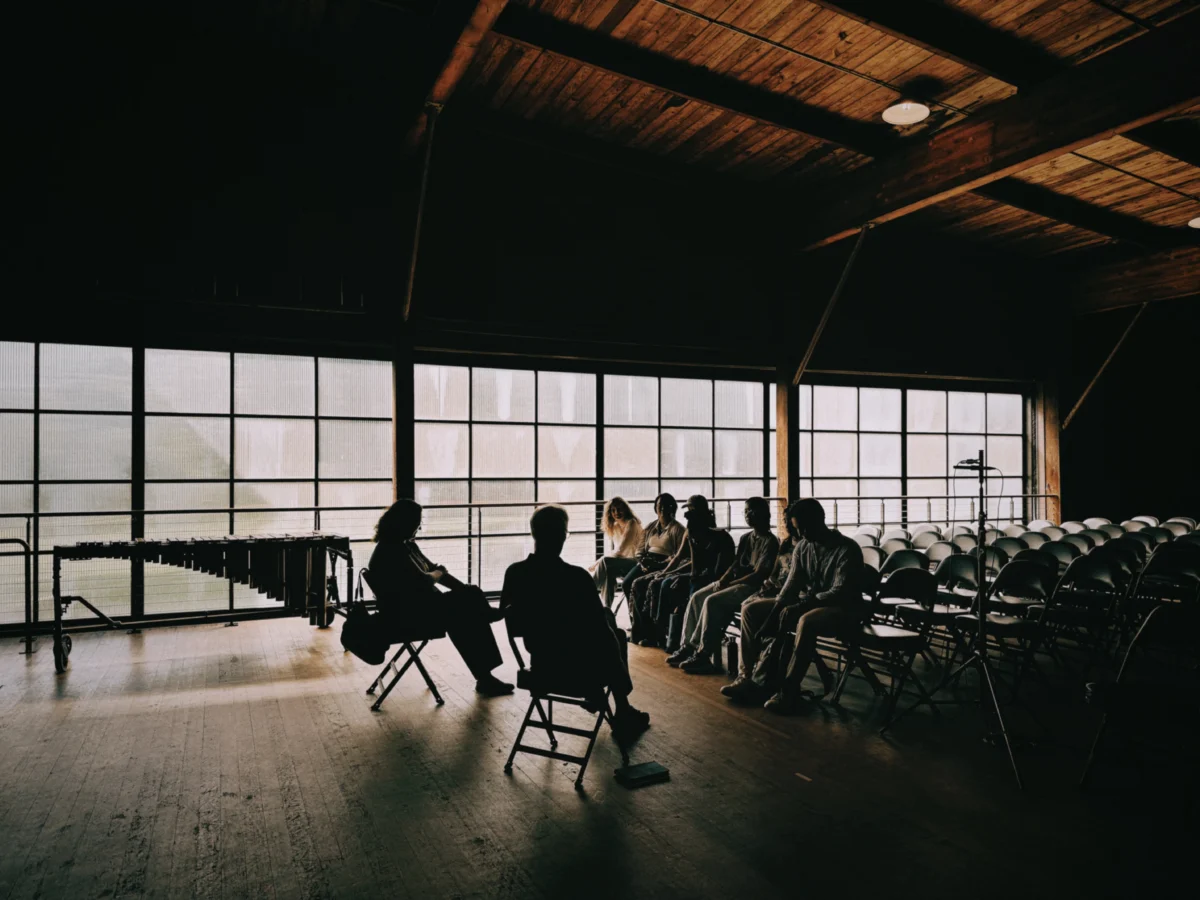
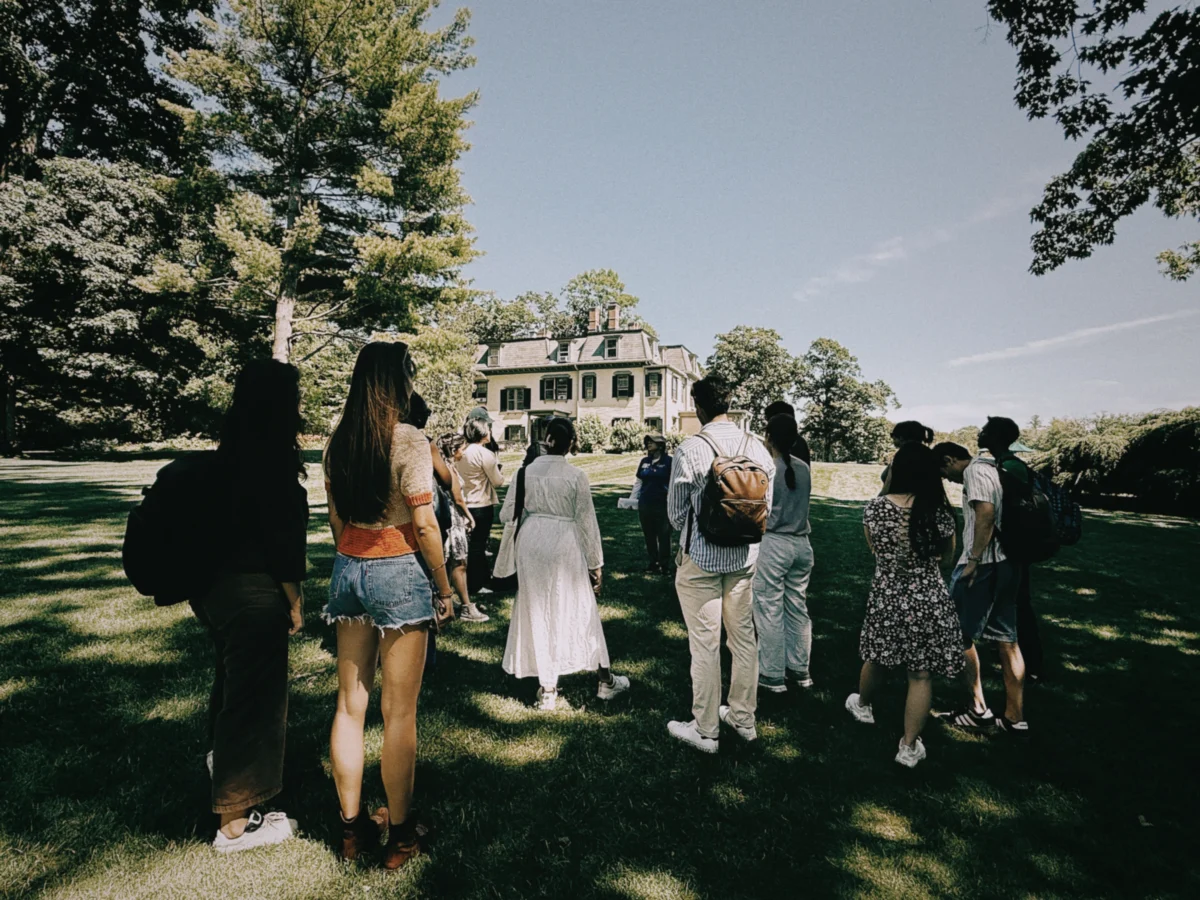
The Scholars moved through the festival like a campus. A guided walking tour opened the day, led by a docent whose husband is an MIT alum. From there they scattered across the Linde Center, Ozawa Hall, and the Shed, reassembling between performances to hash out what they’d just heard before splitting up again to explore. With so much happening at once, Rayna let them choose their own path: half went to recitals while the other half sat down with Robert Kirzinger, the BSO’s director of program publications, and Devin Orr, associate group sales manager.
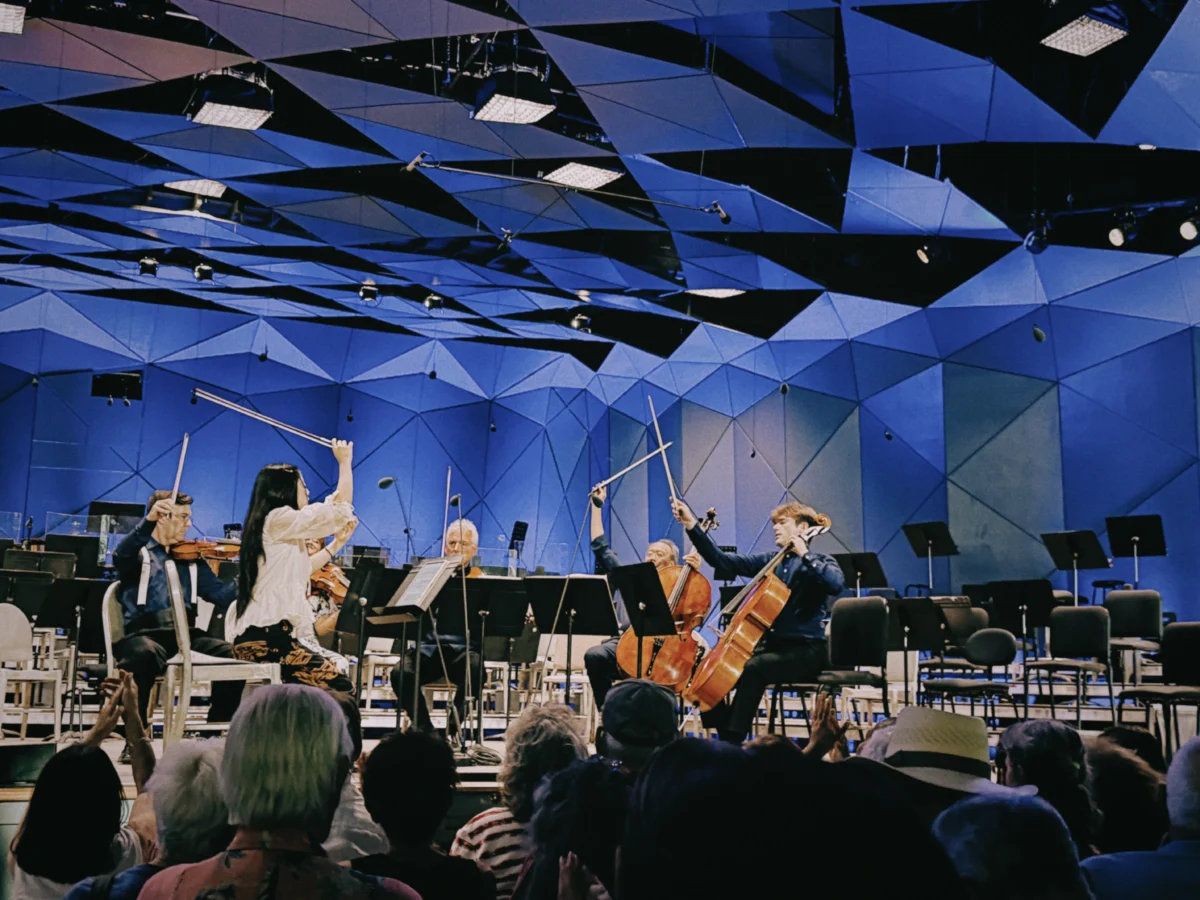
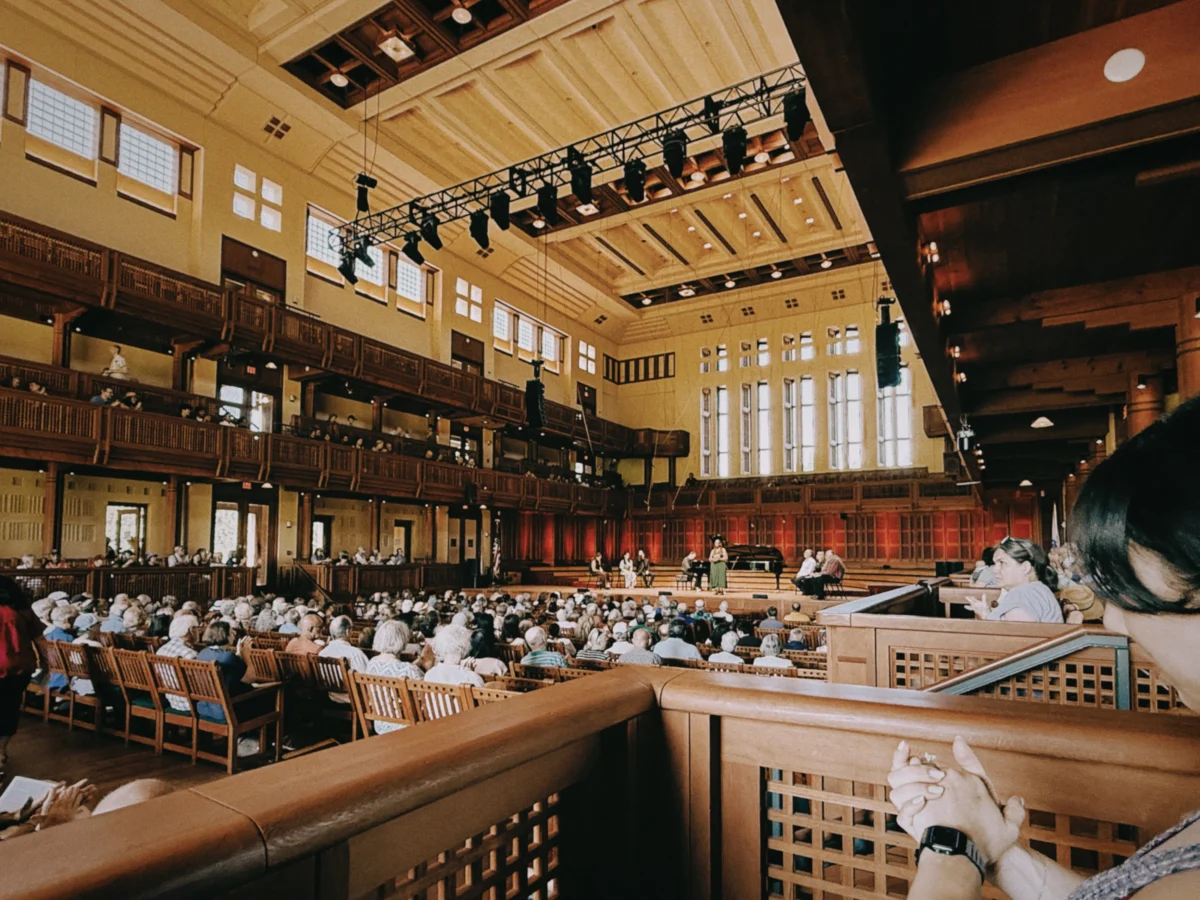
In Ozawa Hall, Tanglewood Music Center Piano Fellows performed Rzewski’s North American Ballads, each pianist preceded by a vocalist in an unconventional pairing that reframed the piano pieces as responses rather than standalone performances. “It wasn’t only the superb level of playing that stood out to me,” said Sonny Young. “Each performance evoked different ideas and emotions that showcased the artists’ expressiveness and artistry.” Several Scholars named it the highlight of the afternoon.
At 6pm, Edward Gazouleas, director of the Tanglewood Music Center and a violist with the BSO, performed Brahms’s String Sextet No. 2 in G major alongside Yo-Yo Ma, BSO concertmaster Nathan Cole, and a group of TMC Fellows. When he walked offstage, he came to find the Scholars. They talked outside the Shed, and then Gazouleas went back in: two hours later he was onstage again for the conductorless Pastoral. Tanglewood is intimate enough for that.
Under the stars
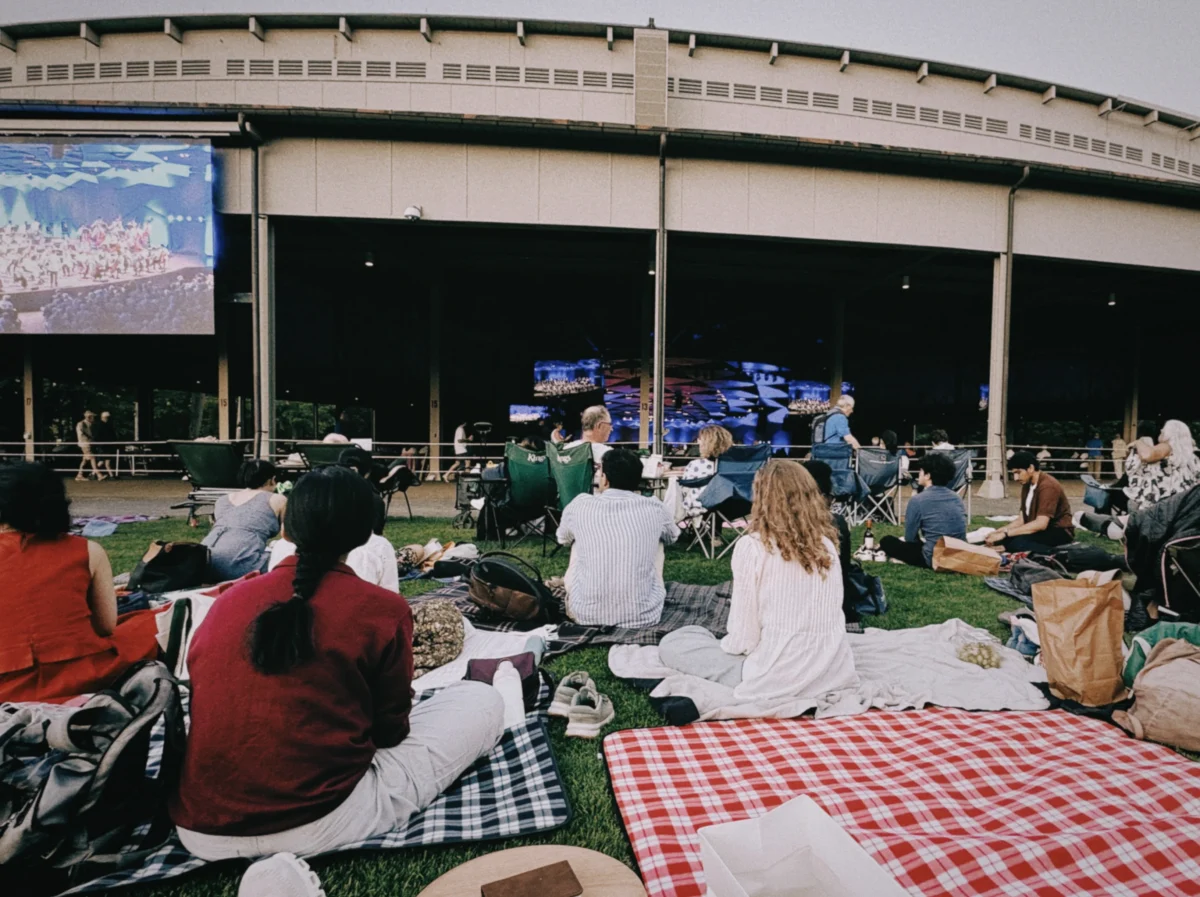
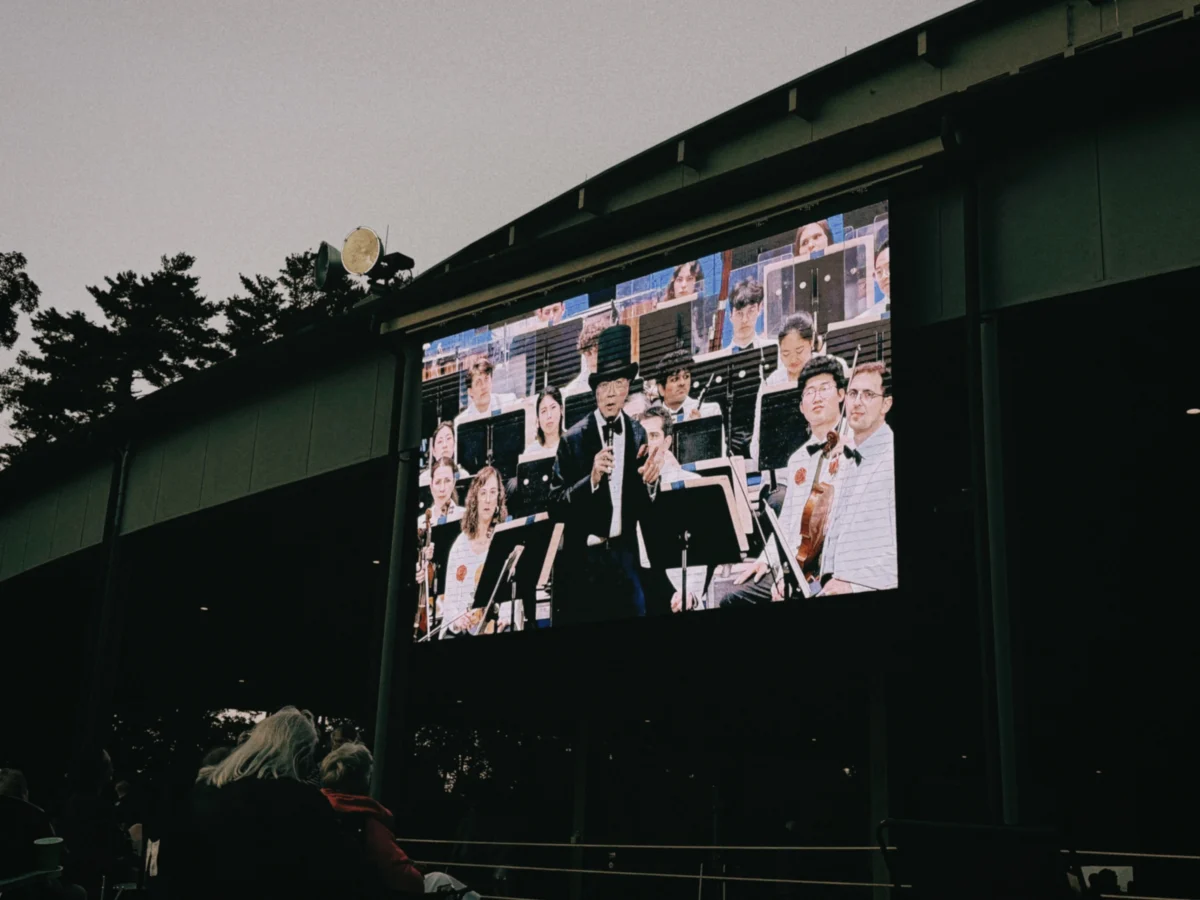
By 8pm, more than 13,000 people had gathered at the Shed for the evening concert. The Boston Symphony Orchestra, Boston Pops, and Tanglewood Music Center Orchestra shared a single program. Ma traded the megaphone for a microphone and hosted in a top hat.
The evening opened with Beethoven’s Symphony No. 6, “Pastoral,” performed entirely without a conductor. Ninety-some musicians kept time by watching each other instead of a baton; on the lawn, the Scholars watched under the stars. In the program notes, Ma wrote: “To perform the Pastoral without a conductor is an astonishing feat accomplished only through collective dedication to an idea, through the attention and care of the musicians to one another. It is an example of what distributed leadership can sound like and a lesson in the practice of democratic responsibility.”
The ride home
“I really enjoyed meeting other MIT students whom I otherwise might never have met,” Sonny said afterward. “It was amazing how quickly we could bond over a shared interest in music and talk about the nitty-gritty details of pieces we enjoy, as well as how different aspects of the performances made us feel.”
The bus left Lenox late. The Scholars had spent a full day inside a festival that treats music-making as something communal rather than something performed at an audience, and they were, past midnight, still comparing notes on what they’d heard and whom they’d met. The experience reminded Sonny that music can create an immediate sense of connection, he said, bringing people together through the ideas and emotions they share afterward. It was still doing that on the bus.
Written by Tim Lemp