
MIT’s Dan Safer directs Tony Torn in a surreal anti-war play bound for New York
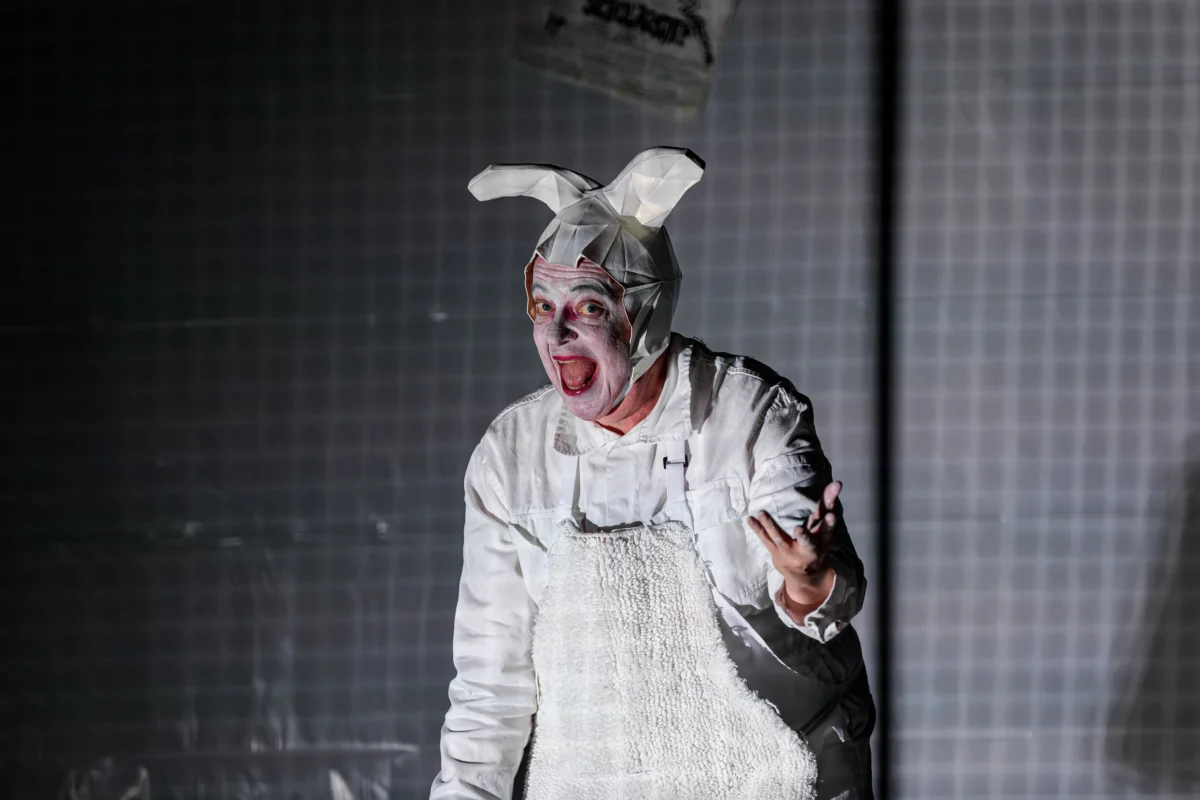
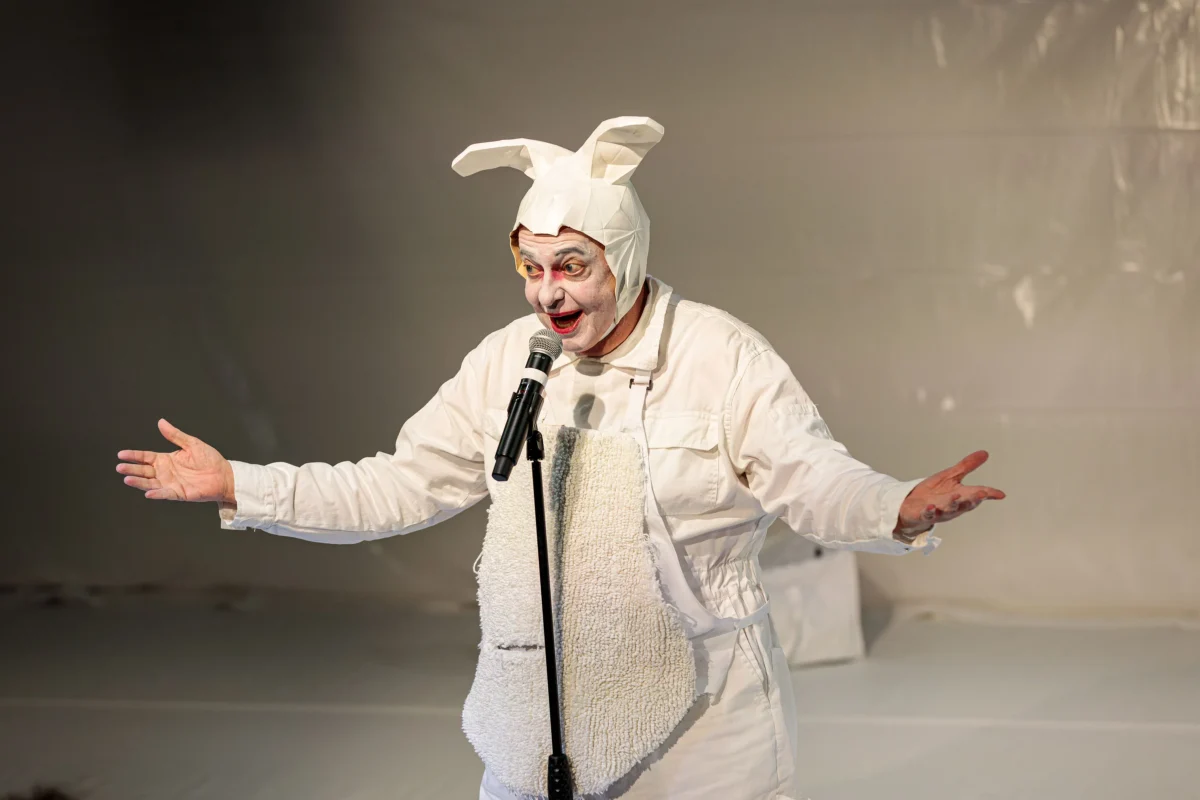
“Hiii-iii! I’m Spider Rabbit.”
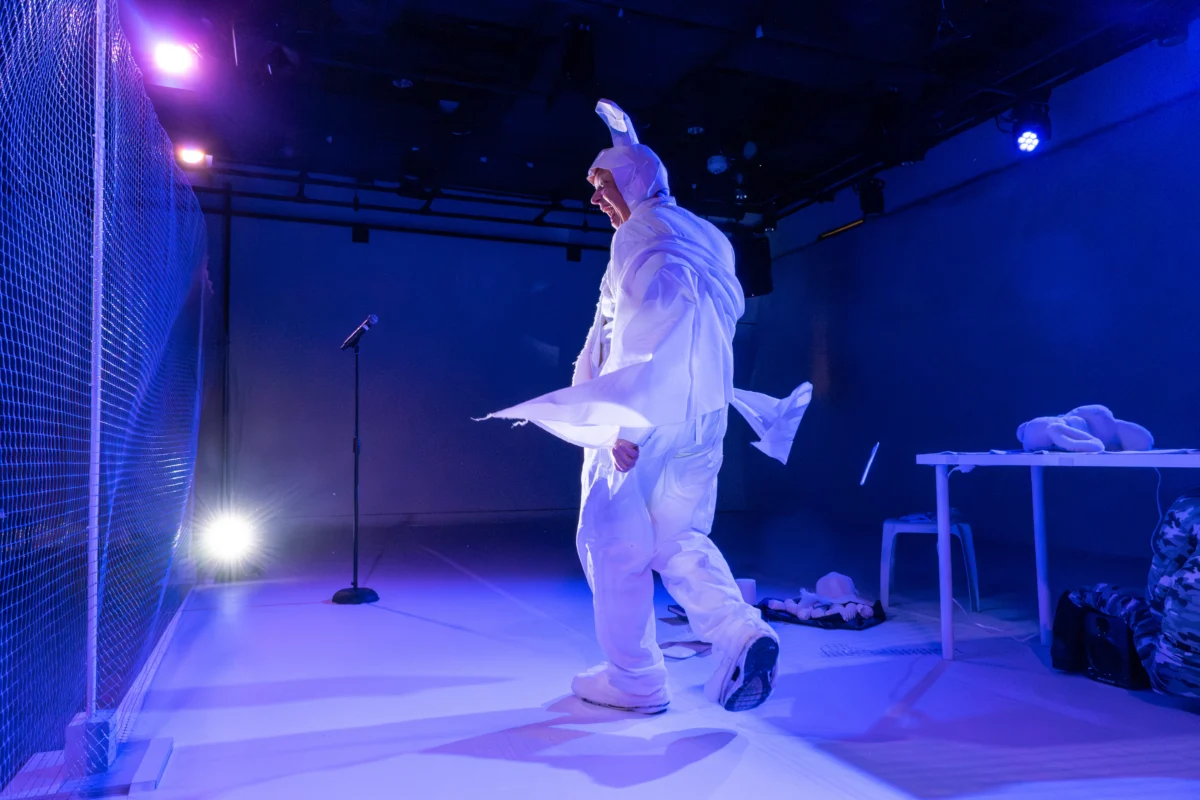
The man wearing white coveralls, floppy paper ears, and chalky face paint beams out at the crowd. With the jollity of a clown and the simplicity of a child, he’s eager for show and tell.
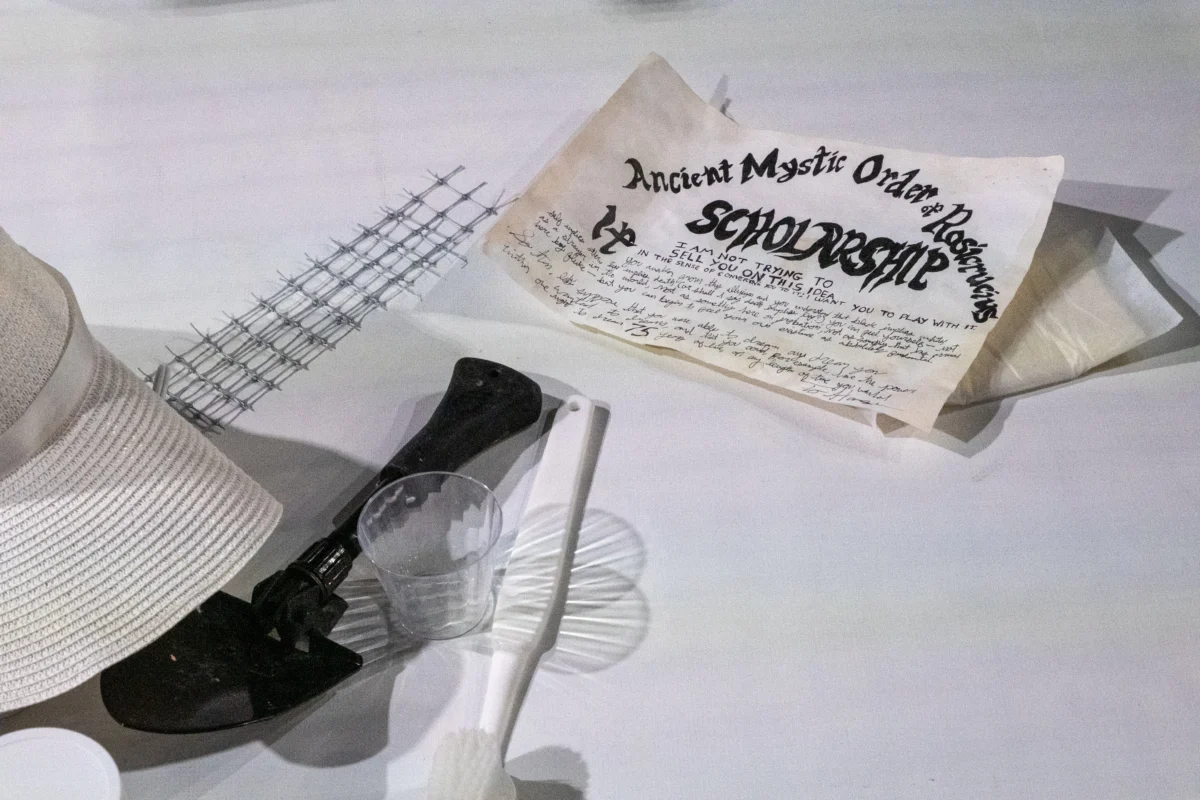
“I’ve got a spoon. A really pretty spoon. I keep my spoon in my duffel bag.”
But there’s something sinister bubbling to the surface in Spider Rabbit, a solo one-act that played to a packed house at MIT’s Building W97 on March 20, following a weeklong residency on campus and just six days before its New York debut at La MaMa Experimental Theatre Club.
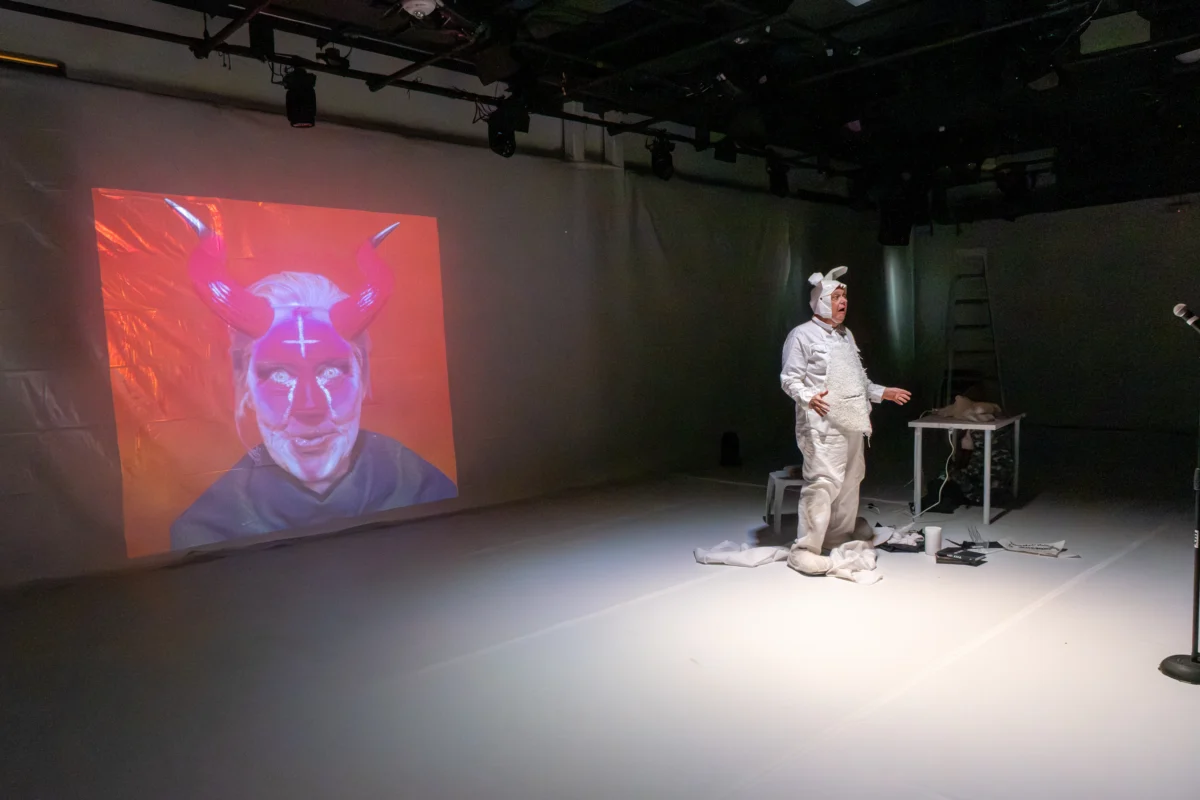
Spider Rabbit paces, disgruntled and confused. He lapses into reveries punctuated by eerie music and the clatter of gunfire. It turns out some of the things in his duffel bag aren’t so pretty. His singsong refrain of “Hi! I’m Spider Rabbit!” begins to sound more like a threat than a greeting.
No one is more freaked out by these tonal shifts than Spider Rabbit himself. He scrambles to find an exit, even scaling a ladder to paw at the ceiling. But he can’t escape — not from the room, not from the audience, and not from the darkness within. According to director Dan Safer and actor Tony Torn, that’s the point of the piece, which poet Michael McClure wrote during the Vietnam War.
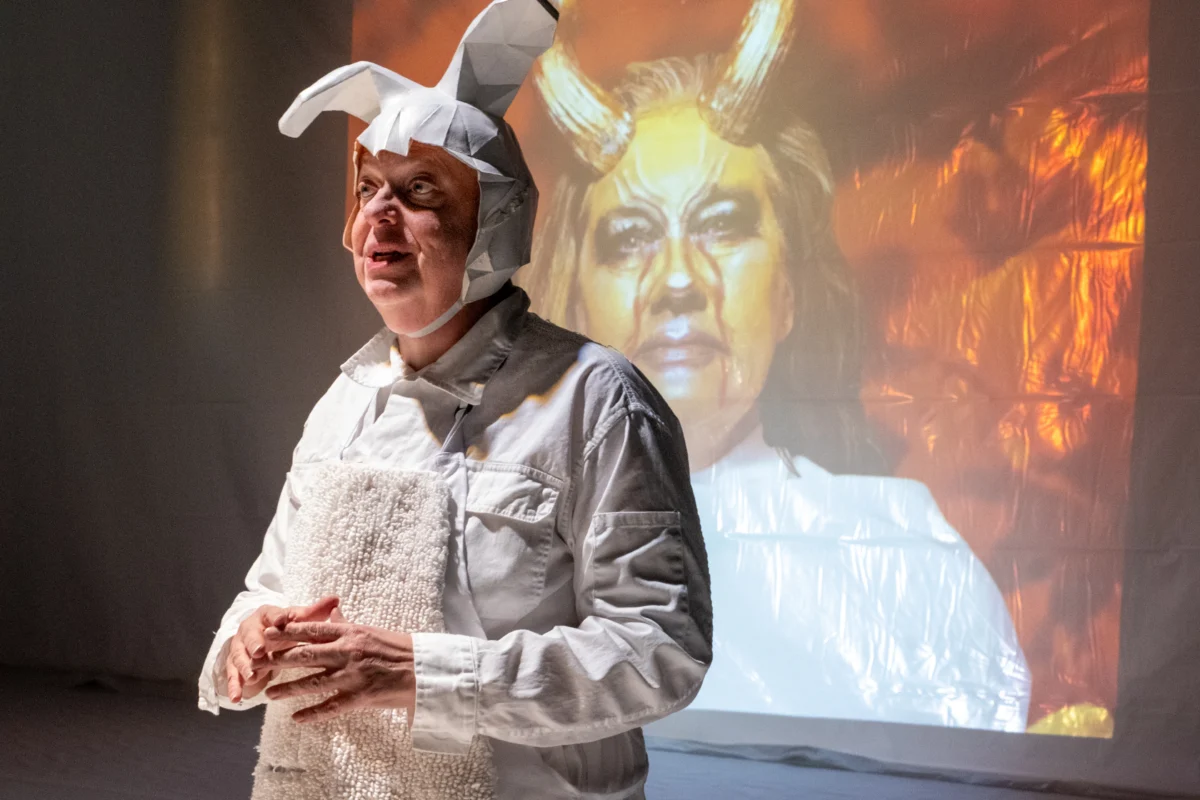
“What the play means for me politically right now,” says Torn, “is that even if we’re distressed by the horror in the world, we’re not willing to embrace how complicit we are.”
“I’m depressed that it seems more relevant with every passing day,” Safer observes, “and less absurd than it used to.”
Supported by a 2025–26 Fay Chandler Creativity Grant from the MIT Center for Art, Science & Technology (CAST), Safer and Torn spent an intensive week working with other creative professionals and MIT students to flesh out a production they’d begun developing together a few years ago.
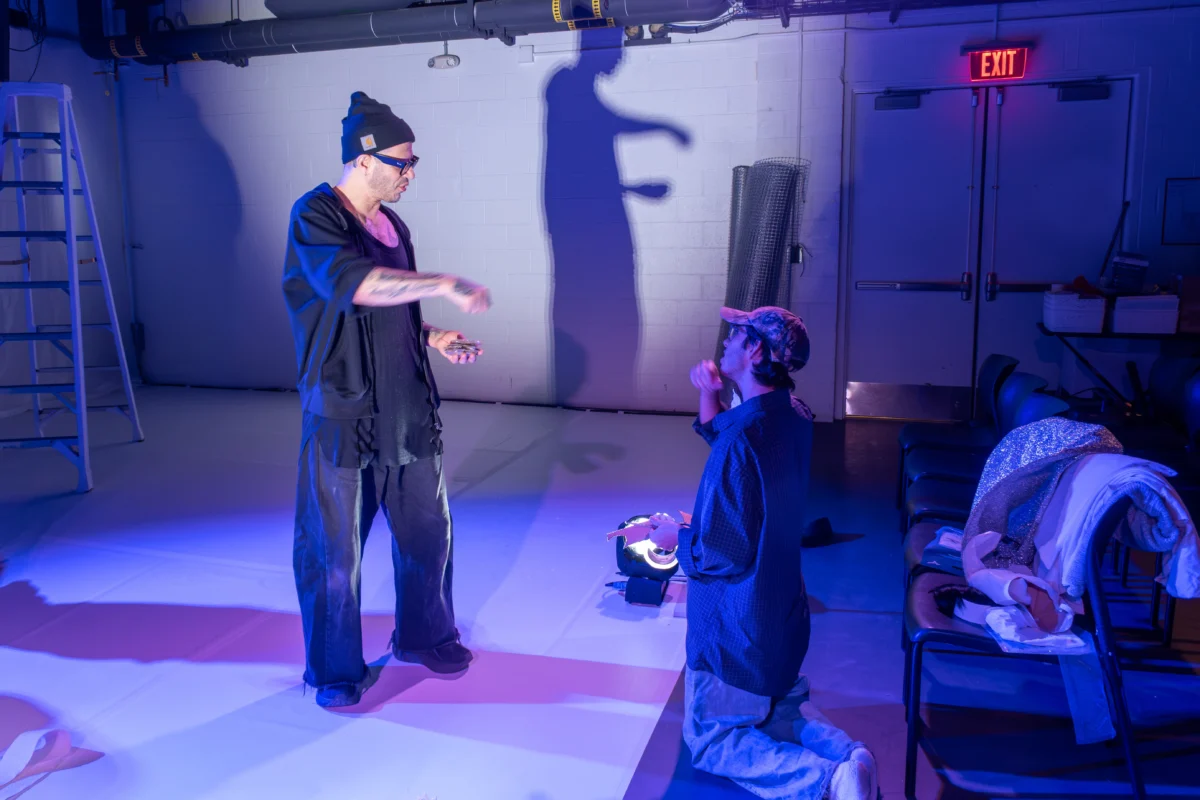
Safer is senior lecturer and director of dance programs at MIT and the artistic director of dance theater company Witness Relocation. This is the third show he’s developed at MIT during his eight years on the faculty. As with the others, he brought Witness Relocation’s longtime scenic and lighting designer Jay Ryan to campus to put his visual stamp on Spider Rabbit, and he collaborated on the audio landscape of the piece with composer, sound designer, violist, and fellow MIT faculty member Christian Frederickson. He also tapped rock/jazz/funk musicians Jared Michael Nickerson and V. Jeffrey Smith to contribute to the score.
“Jared and Jeffrey wrote all the happy stuff, and Christian wrote all the menacing stuff,” says Safer. “I wanted to get two totally different vocabularies for those two things.”
The shadows between the lines
It was Torn who proposed staging Spider Rabbit. As a teen, he’d seen a 1980 revival of it produced by his father (actor Rip Torn), starring avant-garde legend Taylor Mead. “It blew my fragile little mind,” Torn recalls. The play fed his fascination with the link between humor and fear. “I always thought clowns were terrifying. Of course now Harpo’s my favorite Marx Brother, but when I was a kid, I remember I was afraid that he would do something unforgivable.”
Comrades of the New York experimental theater scene, Safer and Torn previously co-created Ubu Sings Ubu, a punk-rock adaptation of a 19th-century satire, which the New York Times praised as “loud, inspired, and more than a little deranged.” It made perfect sense to both of them that their next project would feature an overgrown bunny with a vicious streak.
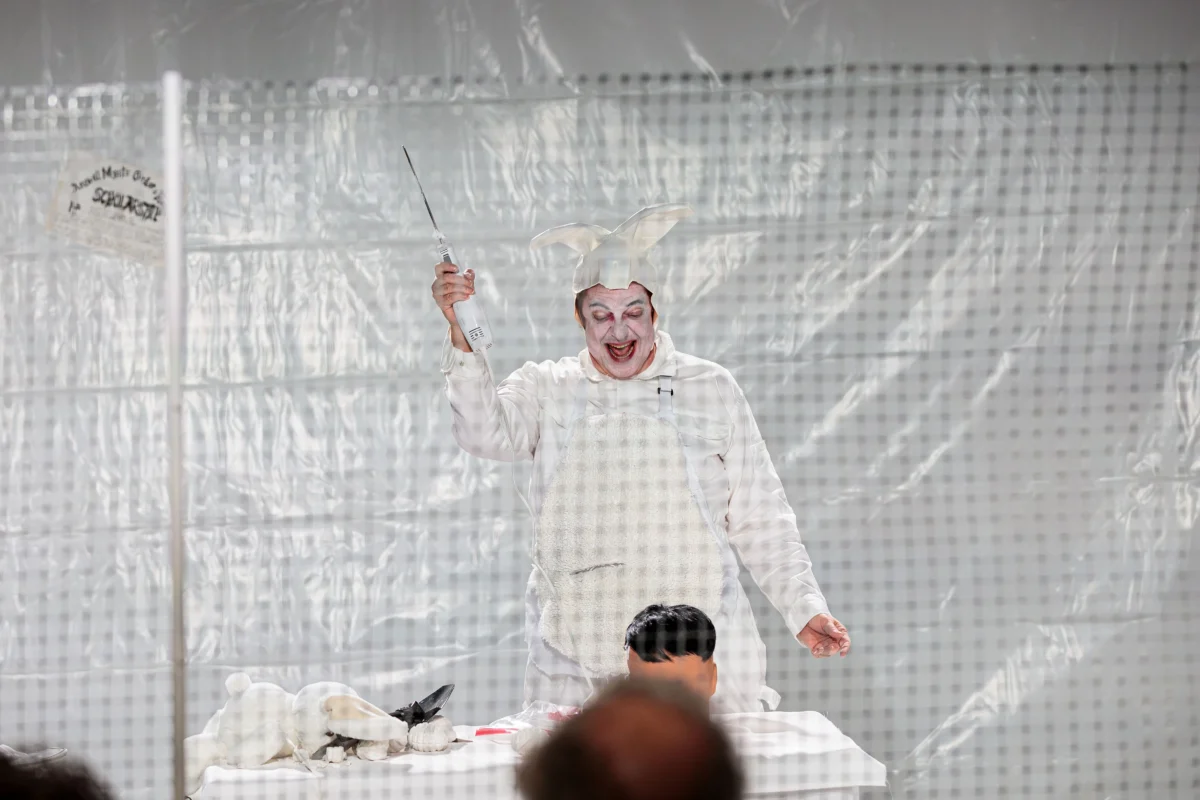
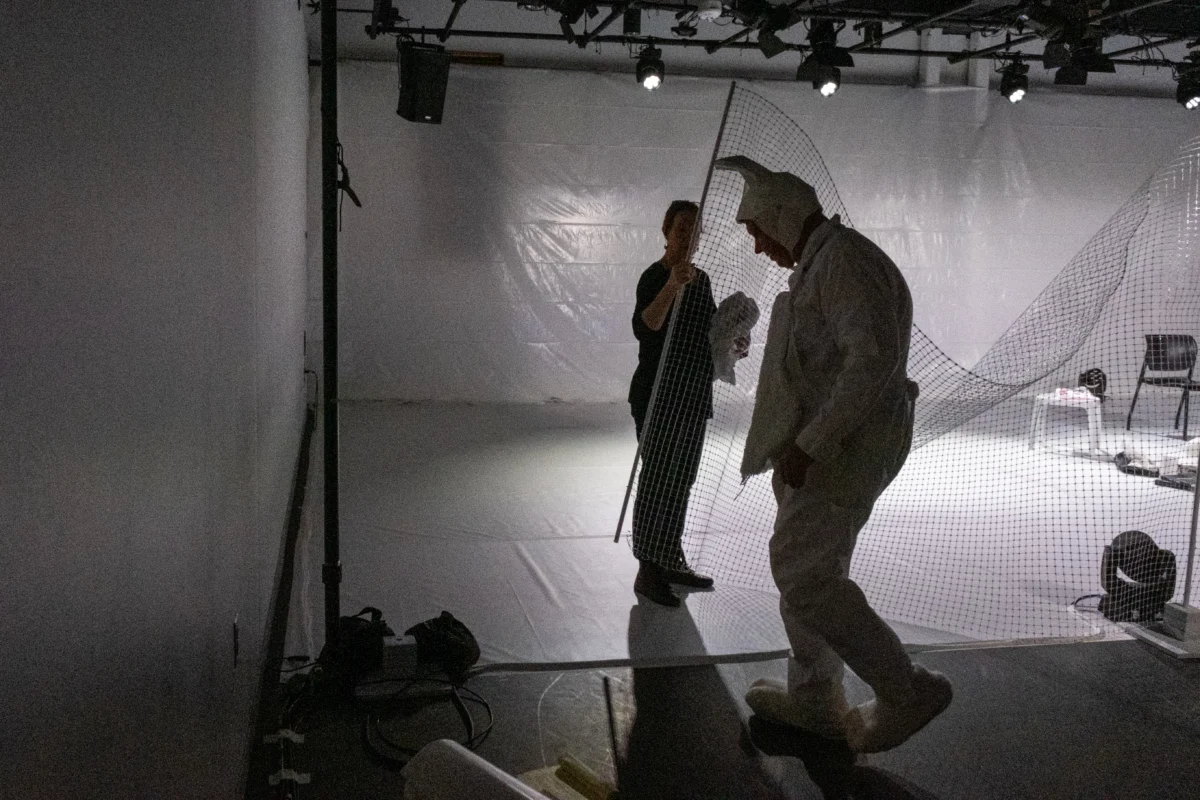
The pair set out to explore the shadows between the lines of McClure’s script. Spider Rabbit staunchly proclaims his aversion to war, but Torn inhabits his body differently — shoulders hunching, voice rasping — whenever the character’s cruelty surfaces. Simple stage directions like toying with a hat or slicing carrots take a sickening turn. Eventually, Spider Rabbit stretches his “web” (a length of silver mesh) across the porous fourth wall between stage and seating. “It gives the feeling that the audience is trapped there with him,” says Safer.
Creating moments that get under the audience’s skin, say both artists, depends on a feeling of mutual trust in the rehearsal room.
“We feel safe enough with each other to turn the censors off and let our guard down,” says Safer.
“In rehearsal when Dan’s about to give a really great idea,” Torn says, “he tends to preface it with, “This is probably a really bad idea.’ I’m always willing to try it if it’s coming from Dan. That’s really the fruit of our collaboration, getting to those places that will make people say, ‘What the hell?’”
Analog innovation
“We had such a productive week in Cambridge, a real confidence boost,” says Torn. “A lot of design elements that were unclear came into sudden focus because of the amazing support we got from the MIT production team.”
In some cases, that meant posing a challenge to Ryan and Frederickson — creating the illusion of electrocution, for example — and staying open to whatever surprising mix of light and sound they might devise to make it happen.
“I like those curveballs,” Safer says. “I like seeing their vision of it. That just gives the piece more and more layers.”
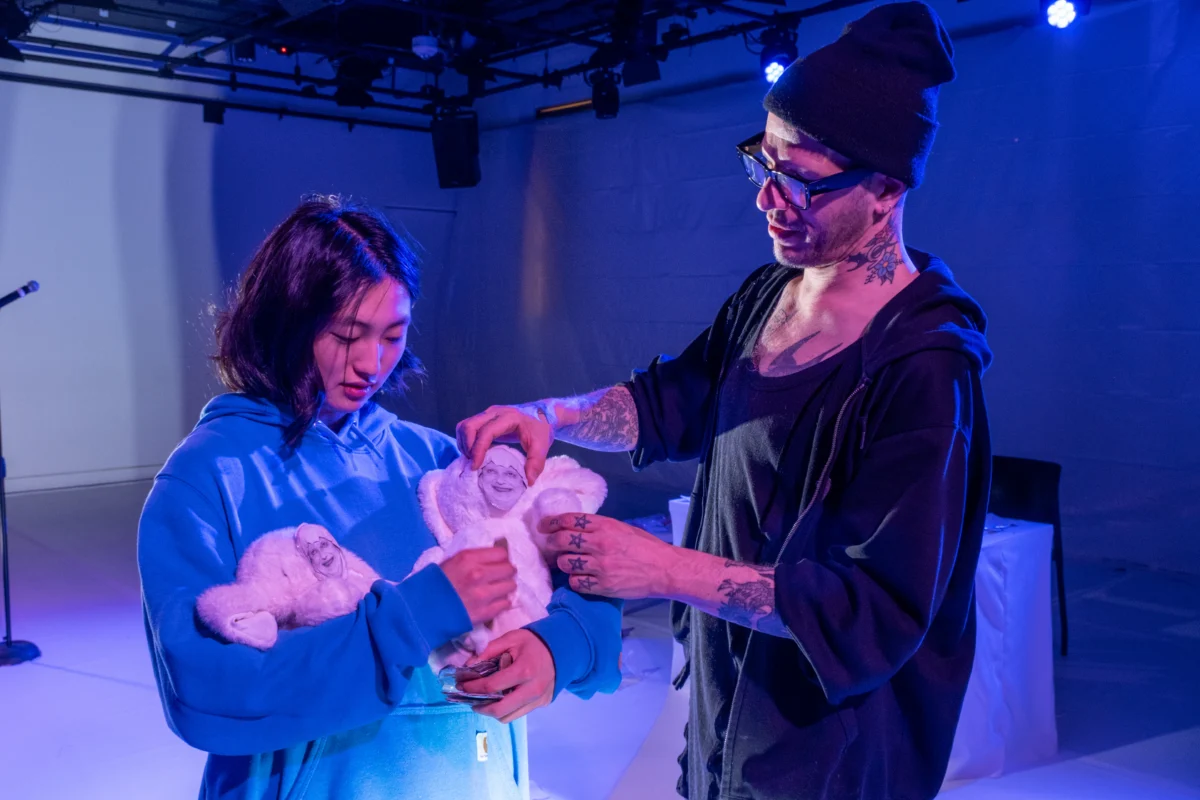
In other cases, Safer was most interested in analog solutions. For example, the props team needed to create a fake blood effect minus any messy aftermath. After a few trips to Home Depot, they met their objective by combining some party supplies, a leaf blower, a gelatin mold, and plastic tubing (it would spoil a pivotal moment to explain exactly how).
“That’s engineering,” Safer asserts. “That kind of innovation is tactile and we’ll feel it more than we would if it were a video overlay.”
For Torn, who taught acting at the Institute a few years ago, the opportunity to engage again with students was a perk of rehearsing on campus. It resonated when he heard the head of the Music and Theater Arts section, Jay Scheib, describe MIT students as problem solvers. “That explains why they are so appealing to teach,” says Torn. “A lot of them are coming from disciplines other than theater, but once they see theater as a different kind of creative problem to be solved, they immediately lock in.”
Joy Ma ’25, who earned her bachelor’s in physics and computer science and is now completing an MEng, has taken more than 10 theater classes at MIT. She handled several tasks during Spider Rabbit rehearsals, including concocting an edible prop, taping wires, and prompting lines.
“I think a lot is learned just by sitting and observing,” Ma says. “It’s super important to be present and dynamic and hop in wherever might be needed.”
Sometimes what Safer wanted most from the students in the room were their unvarnished reactions. “I want to make sure it’s hitting all the buttons for a non–NYC-avant-garde audience,” he says. “I want it to feel universal.”
As always with his productions, a variety of reactions is inevitable — welcome, even. On campus the evening of March 20, those ranged from gasps to giggles. But there’s one button Safer is hoping to press for everyone who sees the show.
“I want people to consider the fact that the world could be different,” he says. “I believe that being a decent person takes vigilance. You actually have to work at it, to really put good into the world. And I want people to think about that.”
Written by Nicole Estvanik Taylor
Editorial direction by Leah Talatinian