
A night to remember
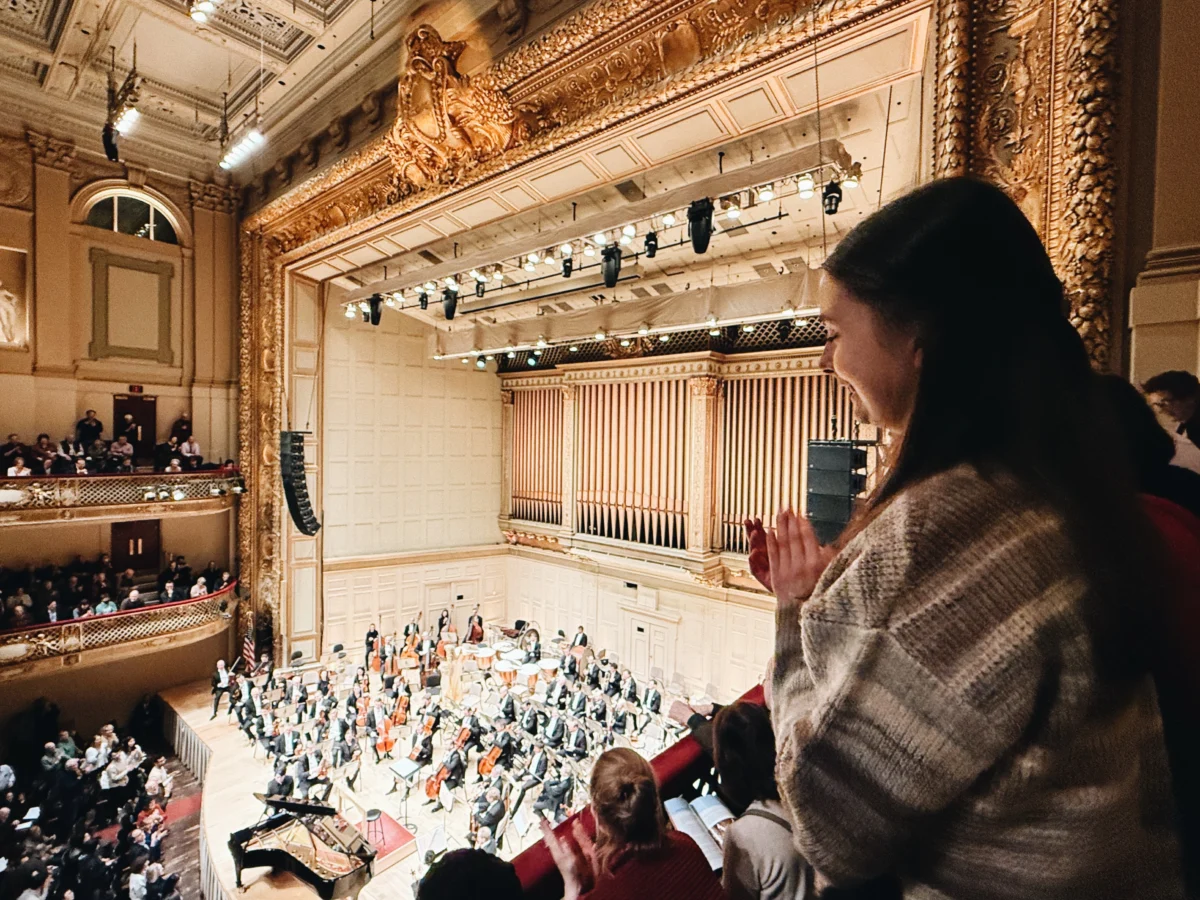
The silence of Symphony Hall was broken by a faint beat on the timpani, and I felt myself drawn forwards, holding my breath. The row of Arts Scholars beside me were doing the same—all of us leaning together, captivated, as a bass joined the timpani in the hushed march. A bassoon picked up the melody, and then the low brass, and soon the whole orchestra was weaving a solemn, haunting harmony.
This was my first time hearing Gustav Mahler’s Symphony No. 1 in D, and by the beginning of the third movement I was entranced. Sonny Young, a chemistry PhD student and Arts Scholar, agreed. “Wow, that was the best Mahler 1 I’ve ever heard in my entire life. Every single gesture, they get it right. The way the conductor waves his hand in the exactly perfect way to capture the feeling of what that piece is supposed to sound like… That was so profound.”
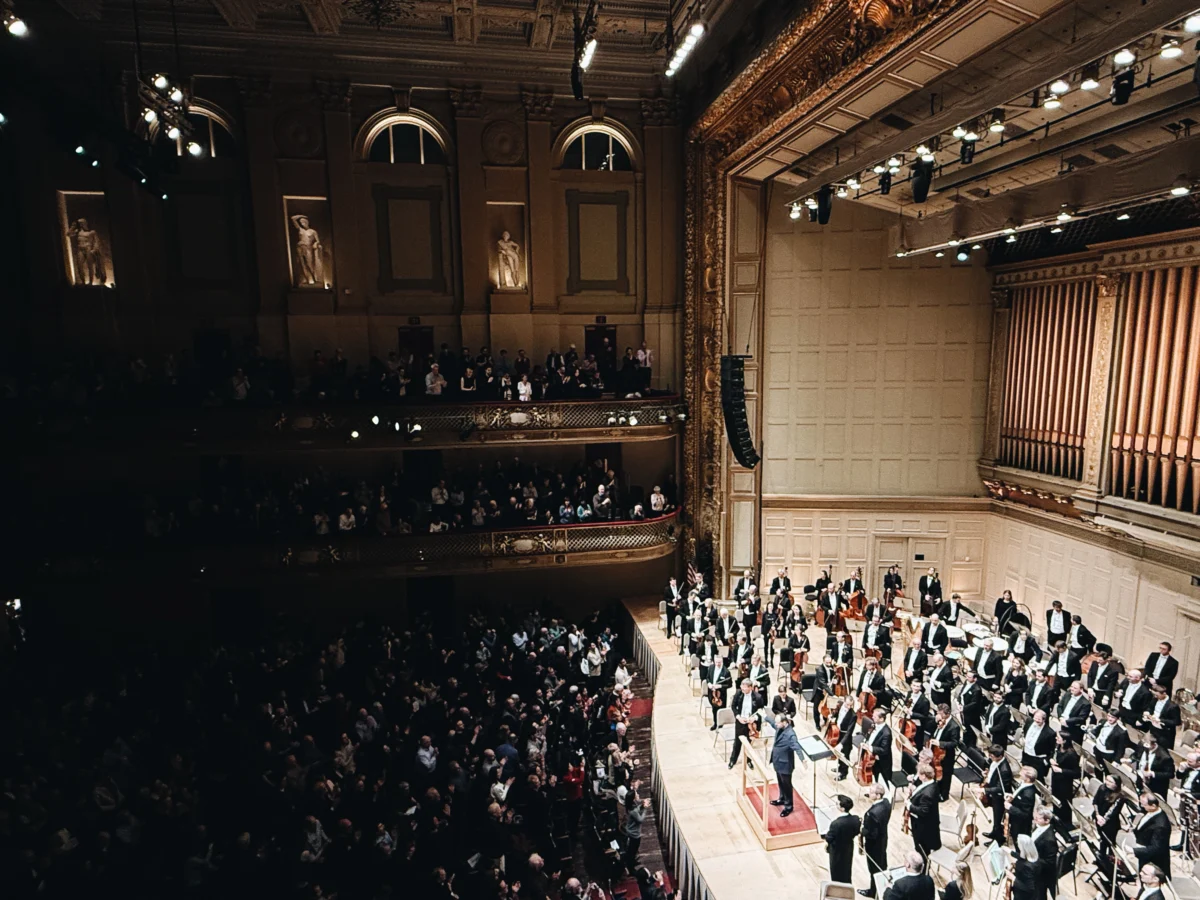
Through the Arts Scholars program, 55 MIT students had the opportunity to attend the sold-out performance by the Vienna Philharmonic, conducted by Boston Symphony Orchestra’s Music Director Andris Nelsons. This highly-anticipated concert, co-presented by the Boston Symphony Orchestra and Vivo Performing Arts on Tuesday, March 3, was the first time the Vienna Philharmonic has visited Boston since 2003.
The evening’s program began with Bela Bartok’s Piano Concerto No. 3, featuring pianist Lang Lang. As an encore, Lang Lang performed his La La Land Variations. The second half of the program included the Mahler symphony and a final encore, Franz von Suppé’s rousing Light Cavalry Overture.
Modern moments, deep history
After listening to recordings of Lang Lang for nearly two decades, seeing him walk on stage was a surreal experience—his dramatic gestures and stage persona were at once familiar and exciting. He imbued Bartok’s composition with his signature emotional depth through luxurious rubatos and stark silences, and the Vienna Philharmonic matched him through every twist and turn—at times it was difficult to distinguish between the piano and the trill of a flute or thump of a bass. In his encore, Lang Lang’s interpretation of the La La Land score was as virtuosic as any classical showpiece. Feet flying, wrists like wings, he used practically every key on the piano.
Brian Zhang, a first-year undergraduate, plays piano and grew up listening to Lang Lang, which is partly what drew him to the concert. “It was interesting that he played La La Land for the encore. I’ve never heard such a modern piece played as an encore before.” He and nearby students continued to debate the choice of encore and its implications.
This was one of many conversations among the Arts Scholars that evening—our discussion of the music was rich with historical asides and current perspectives. I learned about the centuries of tradition in the Vienna Philharmonic and the revolutionary character of Mahler’s first major composition from the students sitting to either side of me.
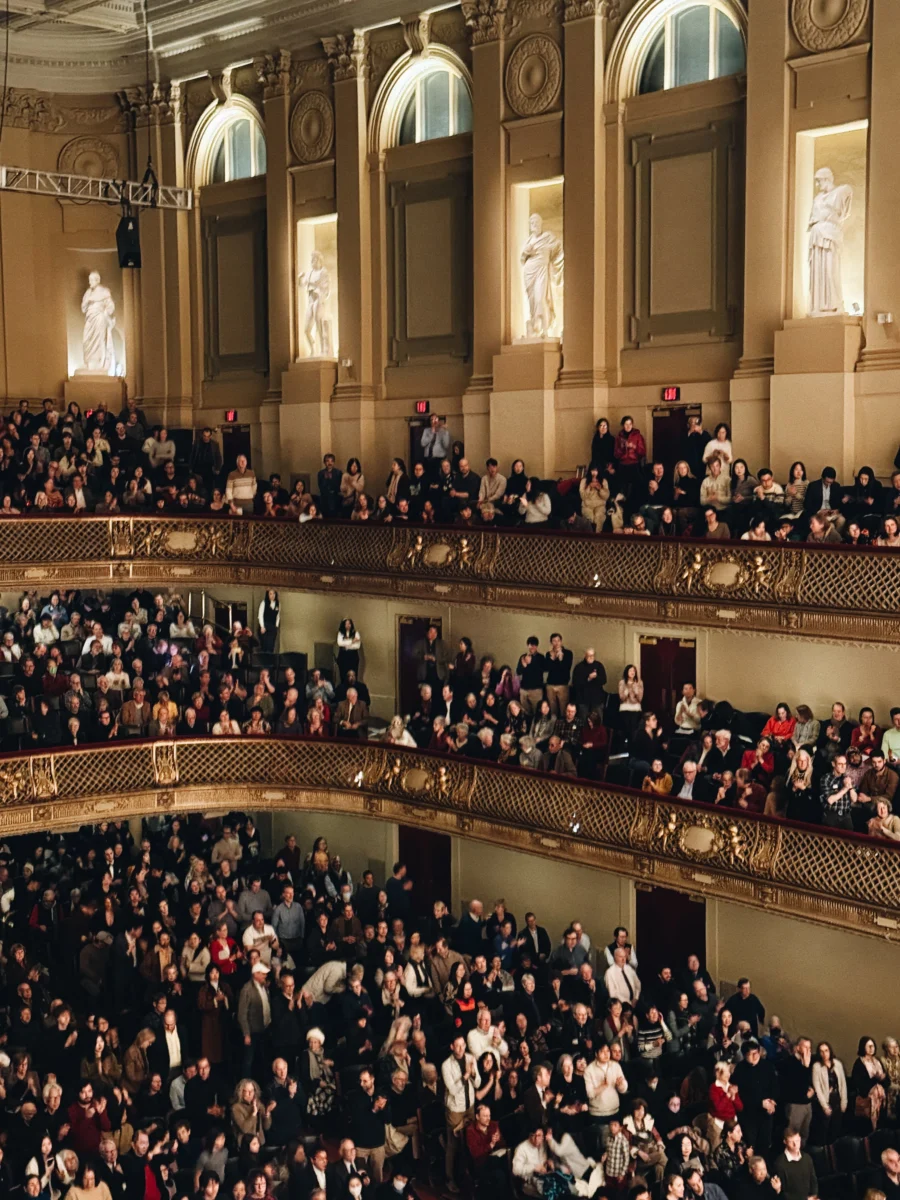
Because while most of us arrive at the doors of Boston Symphony Hall alone, we are immediately greeted by a group of peers. As one Scholar aptly described, it’s a chance to “meet people and ask the question, what brings you out on this cold, snowy winter day to the symphony hall?”
Artists of all kinds
On the bus ride back to campus, I spoke with Michelle Mo, a fourth-year undergraduate in Course 6-3. After recounting all our favorite moments from the concert, she shared more about the impact of being an Arts Scholar. “Before coming to Boston and coming to MIT, I didn’t have the chance to attend a lot of live classical performances.” She told me that the Arts Scholars program has “been a very nice gateway to introduce myself into this world and explore all sorts of different sounds.” Michelle is a visual artist, and currently planning a mural that will be created this spring. Over the course of the evening I also met dancers, photographers, and writers, in addition to musicians, among the Arts Scholars in attendance. Michelle explained, “even if you are accustomed to one specific domain of art… I think it gives you a really cool opportunity to expand beyond what you’re familiar with and engage with art as a whole”.
The combined musical genius of the Vienna Philharmonic, Lang Lang, and Andris Nelsons made for an unforgettable evening. For me, these experiences at Symphony Hall have become an integral part of my studies at MIT, and I’m not alone. “Arts Scholars gives you an opportunity to really make time in your life to make art,” Michelle said. “It’s really easy during the whirlwind of your time at MIT to get sucked up in p-set after p-set after p-set. And you have to break that monotony sometimes by going out and actually experiencing the world. I think that art is one of the best ways that we could do that.”
Written by Abigail Strausbauch Hjelmstad, a graduate student in Course 5 (Chemistry).
Editorial direction by Leah Talatinian