
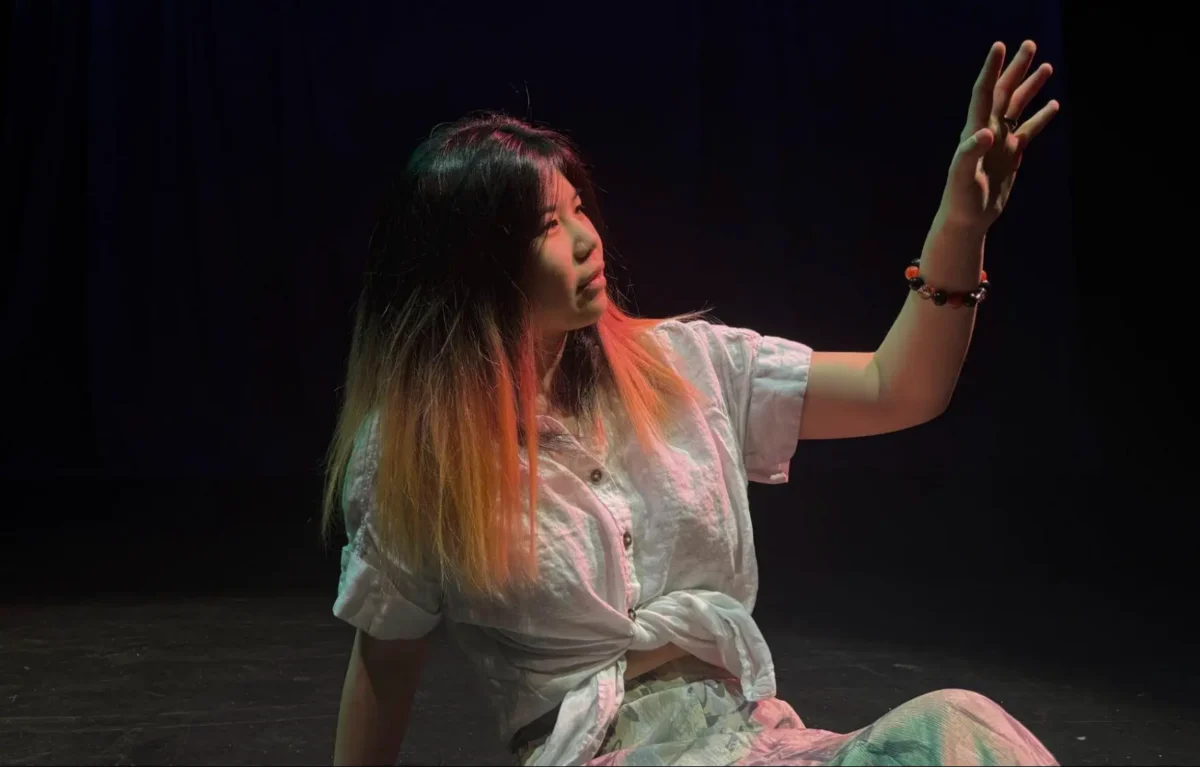
Xinyu Xu takes home this year’s prize
When Xinyu Xu ’26 was eight years old, her entire school was invited to participate in an all-day sports festival at Beijing’s National Stadium—the “Bird’s Nest” stadium that had just been completed for the 2008 Beijing Olympics. The whole school buzzed with excitement. But Xu had a conflict; the sports festival fell on the same day as a stage musical she was starring in. Her mother told her she could choose which event to attend. For Xu, the choice was obvious.
“I chose the musical,” says Xu, the winner of the 2026 Louis Sudler Prize for excellence in the arts at MIT. “I don’t think I could have articulated it at the time, but looking back I see that throughout my life, and even then, every time I was faced with a choice between two activities or paths I always chose the theater.”
Established in 1982, the Louis Sudler Prize is presented annually to an individual graduating senior who has demonstrated excellence and the highest standards of proficiency in music, theater, painting, sculpture, design, architecture, or film. An endowment fund provides a $2,500 award to the honoree.
A talented carpenter, musician, technical director, and director, Xu was recognized above all for her work in lighting design. “Over the course of her time at MIT, Xinyu has distinguished herself as one of the most extraordinary theater artists to emerge from MIT in years,” wrote Professor Joshua Higgason in Xu’s 2026 Louis Sudler Prize nomination letter. “As a designer, she shapes space, emotion, and narrative through light. Her designs are not merely technical achievements; they are expressive flourishes that bring thematic clarity and emotional resonance to the stage. Her work demonstrates a rare combination of aesthetic sensitivity, technical mastery, and musical intuition.”
A Journey Begins
Technically brilliant—and emotionally intuitive—as a lighting designer, Xu started her life in theater as a performer. “My mother thought I was a little shy, so she signed me up for an audition at China Children Musical, a musical theater,” she explains. Xu performed with that theater group from ages eight to thirteen, rehearsing every Sunday and staging one show a year. “I loved being involved in theater, having it be such a big part of my life.”.”
In high school at Kimball Union Academy in New Hampshire, Xu joined the tech crew. Xu says she sometimes spent upwards of 40 hours a week in the school theater, building sets for shows including The Producers and Mamma Mia. She also played keyboards in the orchestra pit during performances—she’d studied piano since she was three. “I can’t say I fell in love again with the theater,” she observes. “But I’d found a new avenue to be involved theater.”
The Turning Point
Xu enrolled in MIT in the Fall of 2021, intending to major in Computation and Cognition (Course 6-9). Theater, she thought, could still be a hobby. “Growing up, I found a certain type of security in math and coding,” she explains. “If your code doesn’t run there’s only one possible explanation. The programmer made a mistake.. It’s all very logical and clear. I liked having that security.”
Still, the first-year student gravitated to the stage, signing up first with the Musical Theater Guild, where she built sets for shows like Jekyll and Hyde and Pippin. She soon migrated into shows with other MIT theater groups, including LOST (Life On Stage Theater) and the Music and Theater Arts Department. She first taught herself sound and lighting design by watching YouTube videos and peppering faculty, staff, and fellow students with questions. Yet she persevered in her original major. She didn’t see theater as a career. Then, in her third year, she signed on as technical director, lighting designer, and co-director for a production of the musical Tick, Tick…..Boom. The experience inspired her to change her major to Theater Arts.
“That whole show is about the struggle between the dream and the practical,” she says. “About following your passion in work. I started to realize I no longer needed the type of security I once craved in mathematics and computer science. That the security I really wanted was to find that one thing that I would want to do no matter what. The thing that will always be my priority.”
Lighting Up the Stage
As a theater major Xu developed and refined her technical skills. She likes to joke that she was “home-schooled” by the theater faculty in building W97. “It really was my home,” she says. “If I was having a bad day, I’d go there just to chill, but eventually someone would ask me to help them with something and I’d end up working.”
Xu deftly made that home her own, first in co-designing the lighting for Volta, a multimedia dance performance choreographed by lecturer Janessa Clark performed by students in the spring of 2025. It was the first time, she notes, where she could channel all the skills and knowledge she’d acquired into a single production. “No one goes to theater to see the lights,” she concedes. “But you can’t see the show without lights. For me, the stage feels like a canvas, and I’m the painter, guiding you on your journey.”
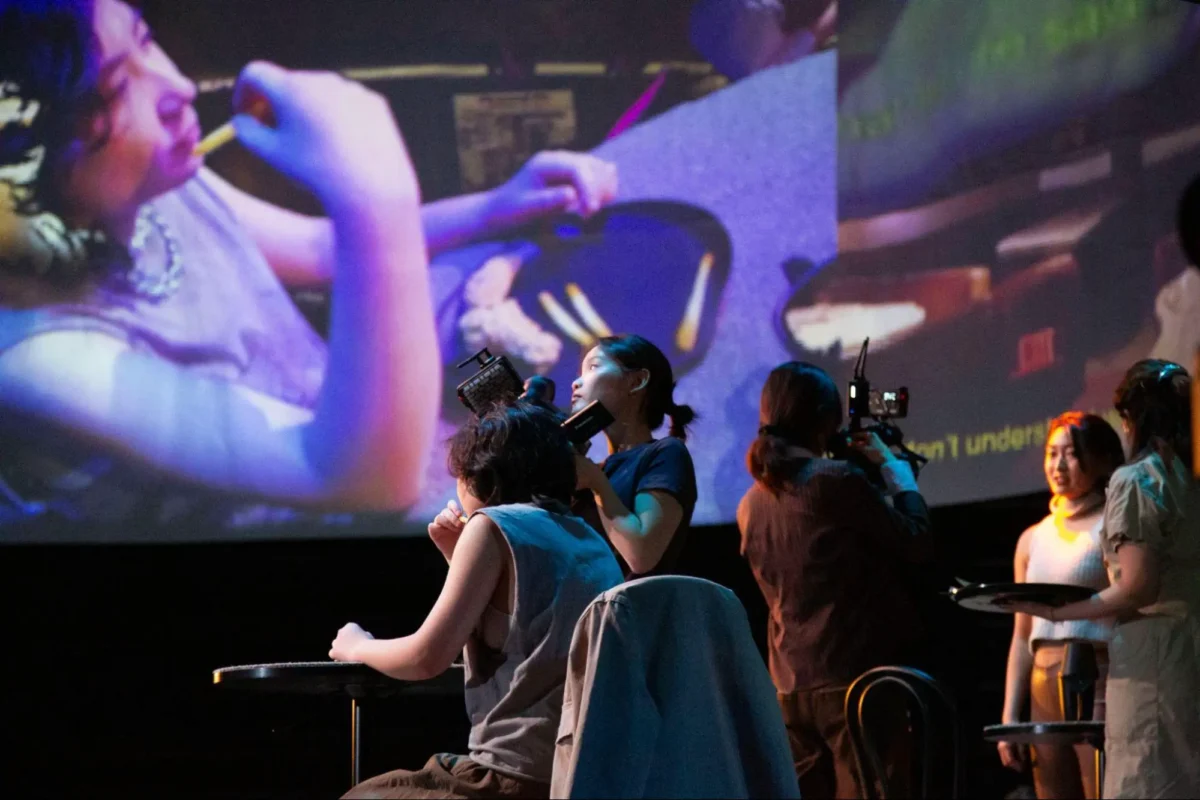
For her senior thesis, Xu lit and associate-directed with Professor Jay Scheib A Dream Like A Dream, a six-and-one-half hour epic production written originally in Mandarin. The project was challenging; Xu needed not only to light the stage but also accommodate an onstage camera crew who broadcast the action onto an enormous screen above the stage. Her work, wrote co-director and thesis advisor Scheib, “was an enormous feat—artistically personal and far-reaching.” The stage director, playwright, and MIT professor lauded Xu’s effort as a “technically dizzying feat in sculpting an experience in time with light,” and as “heroic spatial poetry.”
Early on in production with A Dream Like A Dream, Xu and her team discussed the show, trying to distill its nearly seven hours of drama into a single concept they could use to fashion a fitting environment. The play, Xu realized, is staged in the round. Characters tend to walk in circles. “Until they realize they are walking in circles, and then they break out of the circle and enter a new world,” she says. But the story doesn’t stop there. Even in this new world, the characters soon realize they’re walking in circles again. “I think what the show is really about is finding where you belong,” she says. “Finding that circle you don’t mind staying in. The circle you call home. For me, that circle is the theater.”
The Council for the Arts at MIT presents several awards annually to MIT students who have demonstrated excellence in the arts.
Written by Ken Shulman
Editorial direction by Leah Talatinian